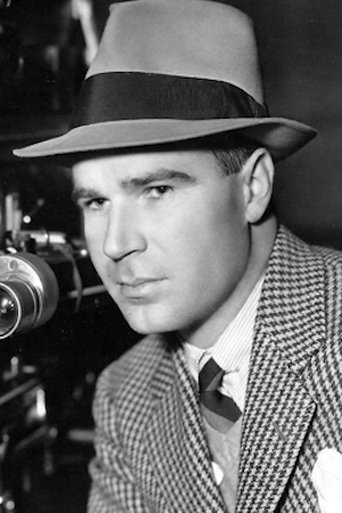
Charles Lang
Born 27 March 1902 in Bluff, Utah, USA · Died 3 April 1998
From Wikipedia, the free encyclopedia Charles Bryant Lang, Jr., A.S.C. (born March 27, 1902, Bluff, Utah – died April 3, 1998, Santa Monica, California) was an American cinematographer. Early in his career, he worked with the Akeley camera, a gyroscope-mounted "pancake" camera designed by Carl Akeley for outdoor action shots. Lang's first credits were as co-cinematographer on the silent films The Night Patrol (1926) and The Loves of Ricardo (1927). After completing Tom Sawyer for Paramount Pictures in 1930, he continued working at the studio for more than twenty years. The style of lighting he introduced in A Farewell to Arms became heavily identified with all of Paramount's films during the 1930s and 1940s, though he occasionally worked for other studios, for instance on The Ghost and Mrs. Muir (1947). In 1951, he began the second phase of his career, this time as a free-lance cinematographer.[1] His credits include The Big Heat (1953) with Glenn Ford and Lee Marvin, Sabrina (1954) with Humphrey Bogart and William Holden, Gunfight at the O.K. Corral (1957) with Burt Lancaster and Kirk Douglas, The Matchmaker (1958), Some Like It Hot (1959) with Marilyn Monroe and Jack Lemmon, The Magnificent Seven (1960) with Steve McQueen, One-Eyed Jacks (1961) with Marlon Brando, How the West Was Won (1962) in Cinerama, Charade (1963) with Cary Grant and Audrey Hepburn, Bob & Carol & Ted & Alice (1969), and Butterflies Are Free (1972). Lang received a Lifetime Achievement Award from the…
130 movies and series on Cinagora, including 38 to stream in France.
 Sex and the Single Girl
 Some Like It Hot
 The Magnificent Seven
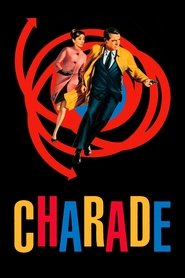 Charade
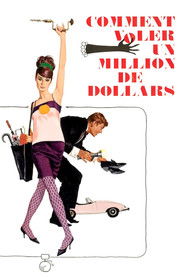 How to Steal a Million
 Sabrina
 Ace in the Hole
 Last Train from Gun Hill
 Peter Ibbetson
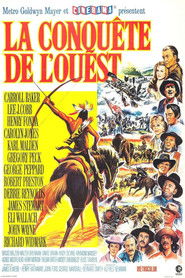 How the West Was Won
 Blue Skies
 So Proudly We Hail